About Sternzeit Design
Hello,
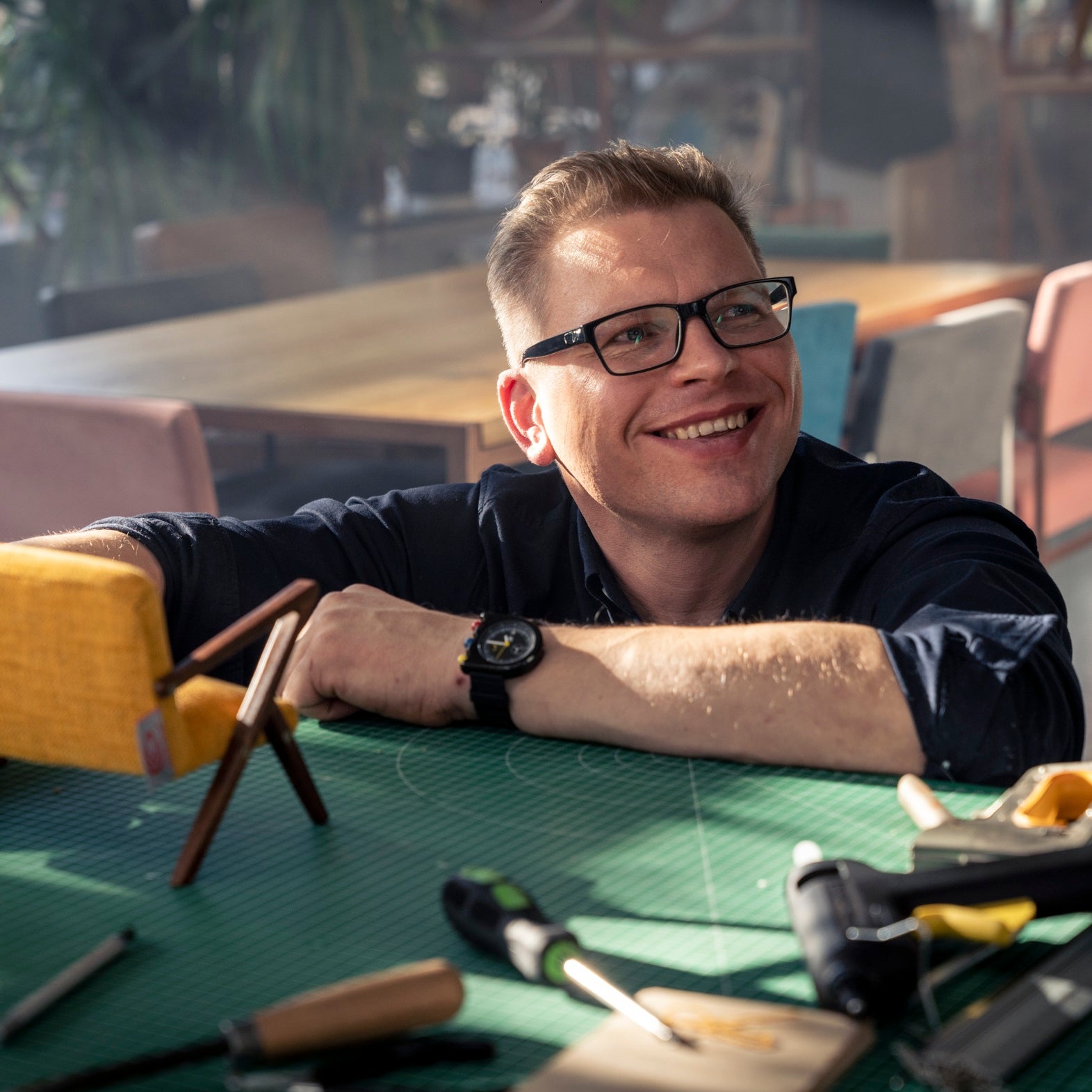
My name is Markus Paulke, and I am the founder of Sternzeit Design.
If you're reading this, you're obviously interested in us—we think that's great, and we'd like to thank you in advance!
We'll start with the short version to give you a quick overview. If you're interested in what you're reading—or if you just want to kill some time—you'll find the Director's Cut a little further down 😉
Who are we, and where do we come from?
Sternzeit Design a Berlin-based family business with family ties to Poland and strong connections to Brandenburg. In our Berlin office, we plan and develop our ideas, which we then manufacture, test, photograph, and ship from Brandenburg and Poland.
What do we do?
Here at Sternzeit Design , we Sternzeit Design to offer you a genuine alternative to the mass market. Timeless, minimalist, extravagant, and durable—with the option to customize anything you want. Made to order, but delivered quickly. Top quality at fair prices. We combine all of this with service that continues to impress even after your purchase—specifically, through sustainability that’s based on durability, repairability, and local sourcing, rather than greenwashing. What does that mean? For example, we collect all returns, refurbish them, and sell them once or twice a year in a B-stock sale. Or we provide replacement parts and help with repairs.
Why do we do this?
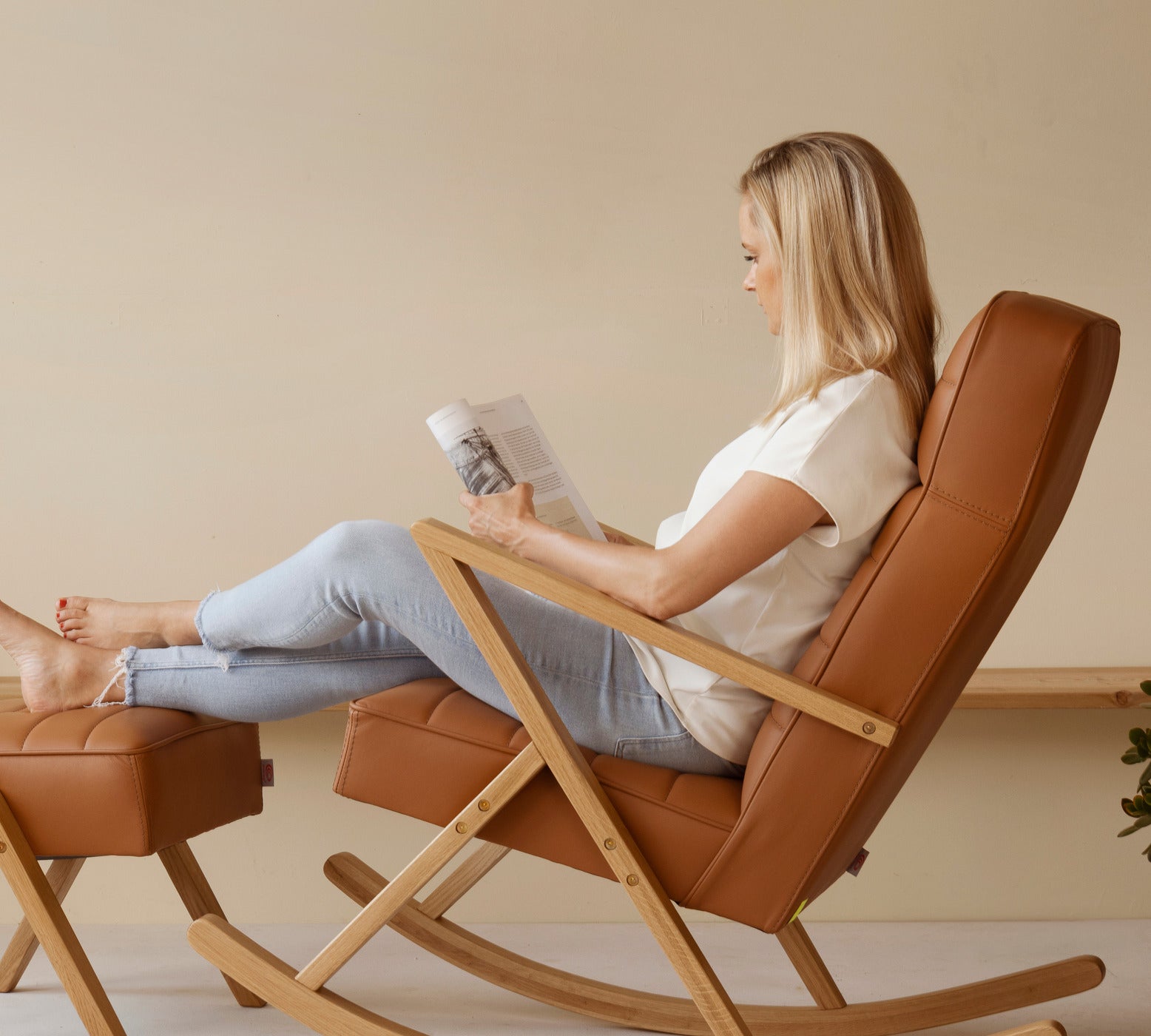
Because at Sternzeit Design , we take Sternzeit Design in designing timeless furniture inspired by the elegance and aesthetics of Mid-Century, the clarity and functionality of the Bauhaus, and the colors of Pop Art. And because we believe that beautiful furniture should make your life more beautiful—and that it should also be possible to adapt it to your individual needs when necessary.
Brief summary:
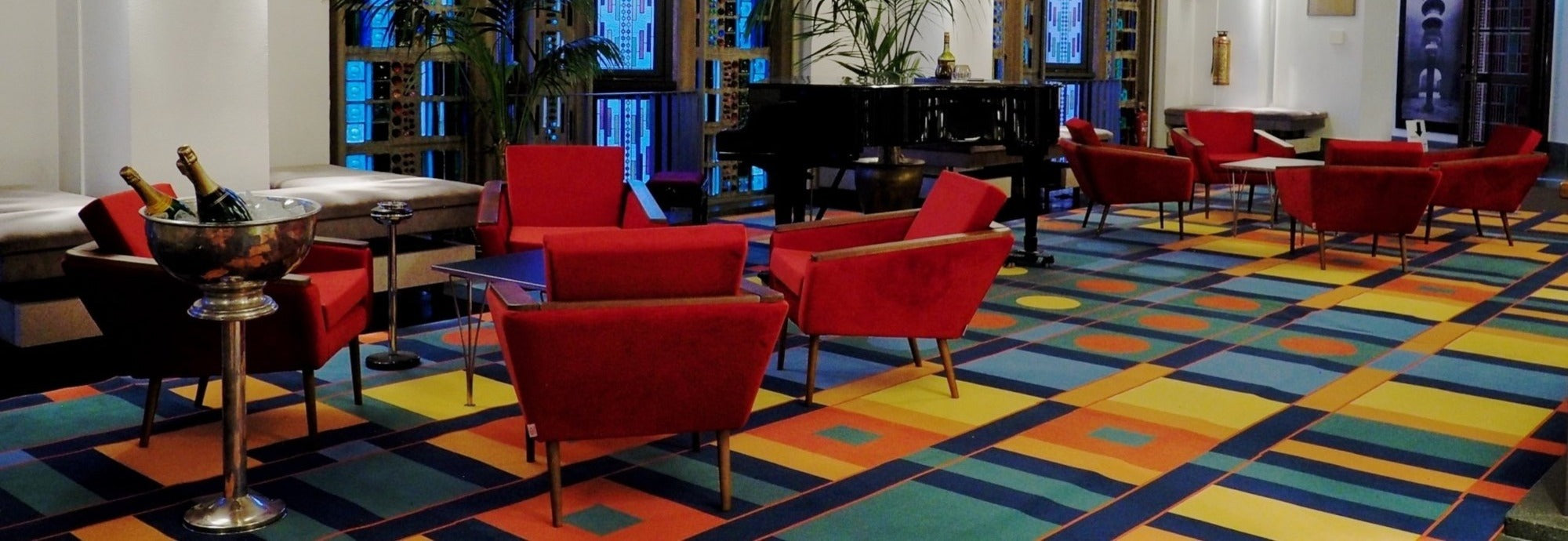
Sternzeit Design an independent Berlin-based furniture manufacturer founded in 2010 by Markus Paulke. Our family-run business creates handcrafted furniture in the Mid-Century and Bauhaus—designed in Berlin and produced in our own workshops in Brandenburg and Poland. Our clients include private customers, boutique hotels, and film productions: furniture from Sternzeit Design in the Netflix series *The Queen’s Gambit*, among others. All models are customizable, repairable, and built to last. We have a showroom in Eberswalde; visits are by appointment only.

Why We Don't Sell Dinosaurs Anymore and Why We Love " Queen's Gambit " …
Shortly after I turned 20, I figured it was time to get my first place. Back then, you still had to look in newspapers, and lo and behold: an old building, a rear building, great location—but in terrible condition! Ten out of twelve apartments were empty; only a somewhat eccentric old lady lived on the ground floor, and right next door to her was Angela Merkel’s mother (well, that’s Berlin for you). I checked out all the empty apartments and then decided on the bel étage (yes, I’m talking about Berlin on the Spree here—though this was back in 2001).
My father was already self-employed in the GDR, renovating apartments. Wallpapering walls, sanding floorboards, installing hardwood floors, replacing windows and doors, tiling bathrooms—I picked up all of these skills over time during my school breaks, and after a while, the results of my work even justified the fact that I was getting paid for it. So I took it upon myself to renovate my own place.
Just under 6 months later, I was done, and now all I needed was some furniture. Unfortunately, my bank account was just as empty as the apartment, and the furniture I liked best was, sadly, way too expensive. Saarinen, Eames, Jacobsen, and the like are, regrettably, not for apprentices or those just starting out in the trades. Could I maybe build my own furniture? Practice makes perfect… I quickly built a bed, a dining table, and a few shelves—and I actually enjoyed it! Could I maybe even make a living doing this in the future? I finished my physical therapy training shortly after that and already knew that what I really wanted to do was build furniture.
How to get started? Since my savings went toward renovating my apartment, I couldn’t afford a workshop or a store. So I decided to enter the business world as a “semi-legal, itinerant” vendor at train stations and flea markets. And since beds and dining tables were a bit impractical for a mobile stand, I chose a 3D wooden dinosaur skeleton as my first product. I have no idea why I thought that might be a good idea. Maybe because I’m a big fan of Star Trek and Jurassic Park, and the Enterprise NCC 1701-D seemed a bit too complex to build as a 3D wooden puzzle.
No sooner said than done. I bought a small electric scroll saw, built my first 3D wooden frames, and then set up shop at Berlin’s Ostbahnhof with my first dinosaurs. I didn’t sell a single one on the first day, or on the second either. I started to get the feeling that even my little dinosaurs might go extinct very quickly and that maybe I’d be better off working as a physical therapist after all. On the third day, though, things finally started to click: I’d actually sold one dinosaur! I thought that might be my big break—but it wasn’t. It wasn’t until later that I found out my mom had sent someone to buy the dinosaur—oh boy, it was well-intentioned, but it still stung.
Well, there’s a lot going on in Berlin, and that’s how it happened that, a short time later, I more or less accidentally (and because, to be honest, things hadn’t gone so well with those first woodworking kits) started a cleaning company. That worked out pretty well for a few years until, in 2009, in the wake of the real estate crisis, a few “reset buttons” were pushed in the Berlin real estate market as well, and a lot of value vanished into thin air overnight. Unfortunately, along with that, my clients and my cleaning company also disappeared.
But since the cleaning business had gone well for 3–4 years, I’d managed to save a little money and figured it was time for a second try in the “interior design” industry. I found a run-down storefront (but in a good location) in Prenzlauer Berg, and I already had some experience with renovations. I bought old furniture on eBay and at flea markets, restored it, and then resold it in my shop. Luckily, that went a little better than with the dinosaurs. I was able to pay my rent (mostly) on time and had fun doing what I was doing. After five years, the lease expired, and the “friendly” property management company decided that an 85% rent increase was a reasonable and fair measure—even though I’d renovated the store at my own expense. I did a quick calculation, and my calculator told me to move out.
On the outskirts of Berlin, I found an old barn where I stored my stuff and thought about what to do next. From then on, I wanted to focus solely on bringing my own ideas to life and selling them online to avoid those rent sharks. It went better than expected. Soon the barn became too small, and we moved to a larger warehouse. From now on, “I” becomes “we,” because from here on out, we can talk about a team.
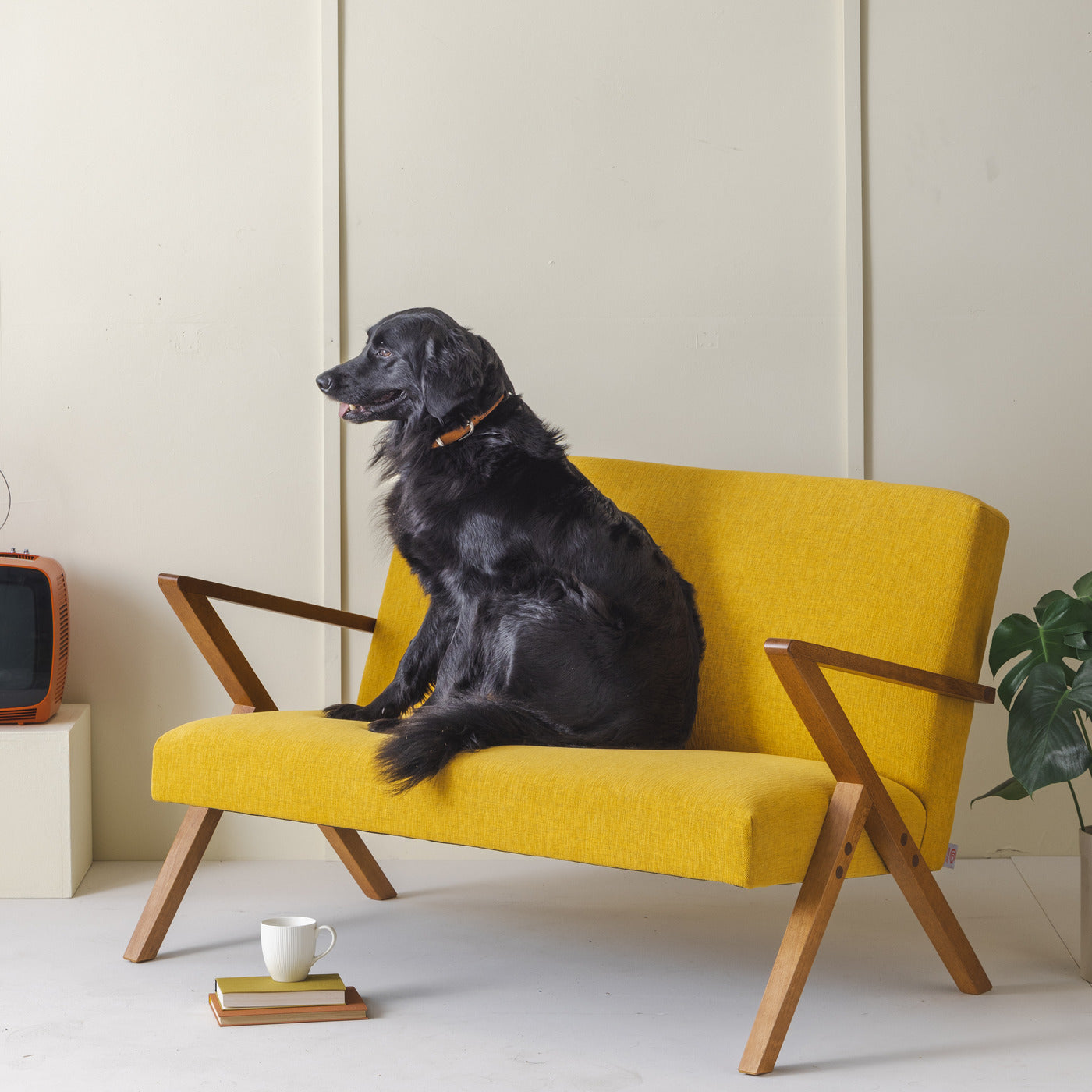
A little time passed, and one day I got a call from a nice guy named John, who asked me how many Retrostar Chair sofas we had in stock. I told him we could build as many as he wanted. He seemed to like that, because he said they needed a lot of furniture for a production they were shooting in Berlin on behalf of NETFLIX. My first thought was that he was some kind of weirdo with too much time on his hands, because in Berlin, a lot of people have so-called “projects.”
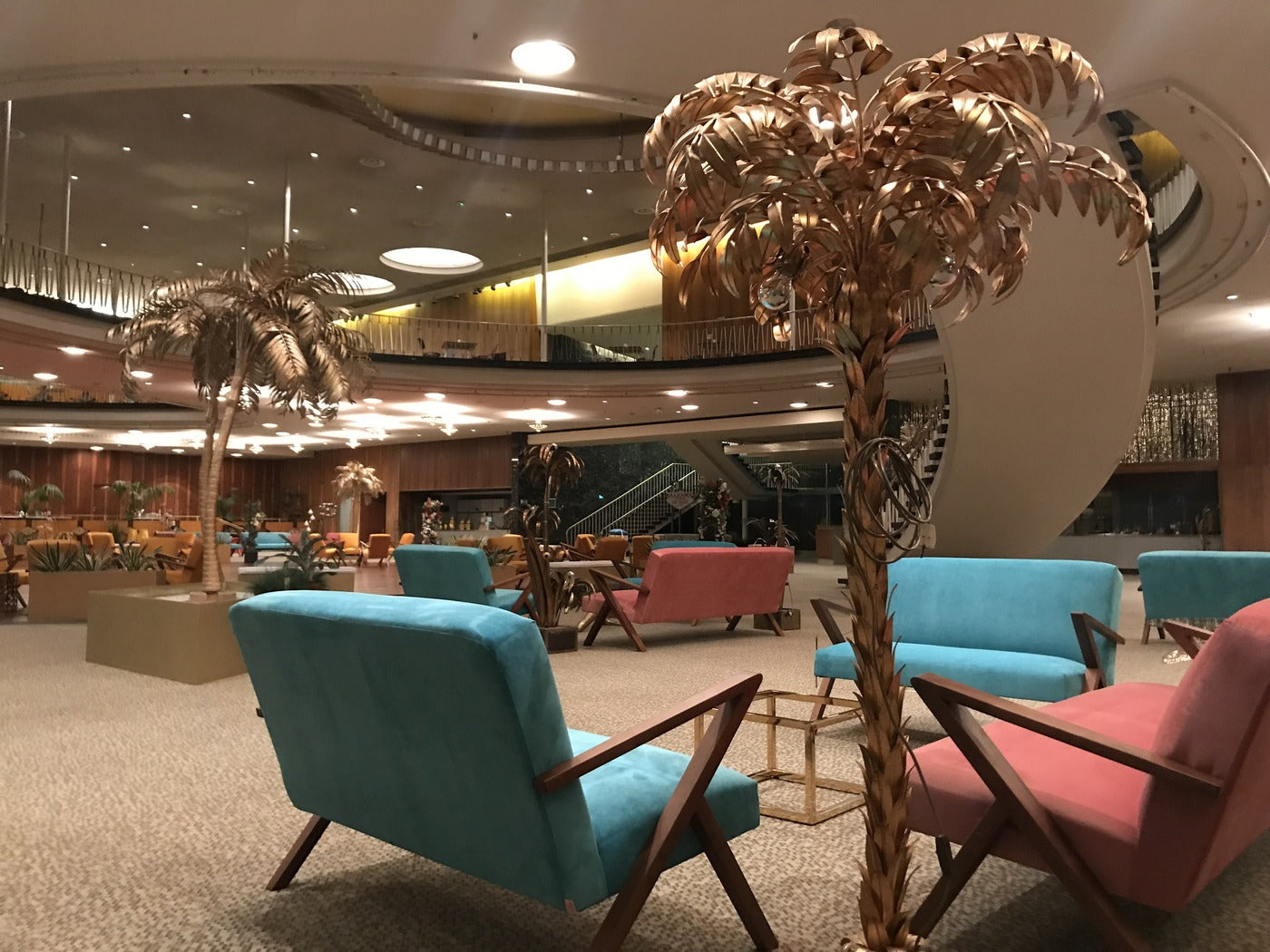
Luckily for us, John wasn’t some weirdo, but a super-nice employee at X-Films, and shortly afterward we got to furnish several stunningly beautiful sets from the Netflix series * Queen's Gambit *, which was filmed in Berlin, with our furniture—and we even got to watch the filming. That alone was really great, but the fact that * Queen's Gambit * turned out to be such a cool series and racked up plenty of awards—like the Golden Globe, the Emmy, and the DGA (Best Set Design!)—made it all the more wonderful. Fortunately, X-Films enjoyed working with us just as much as we did, so we were able to collaborate on another feature film project in the fall of 2022, and we’re looking forward to whatever the future holds.
What else is there to say? In Austria, we were able to furnish Manuel and Anna Veith’s beautiful Arx Hotel with our furniture. For the Berlin-based event agency Openers, we regularly bring plenty of color to their events—for clients like Spotify, for example. And despite Brexit, most of our furniture is still in London, and unfortunately, we still don’t have a distributor in Japan. It could be worse.