What is Mid-Century Design? Definition, characteristics, and furniture style
Mid-century design refers to an interior design style from the mid-20th century, roughly between 1945 and the late 1960s. Typical characteristics of mid-century furniture include clean lines, functional construction, and materials that showcase their natural qualities. The aim of this design era was to combine aesthetics with everyday practicality.
But what exactly defines Mid Century Design – and why does this style still inspire so many people today?
Below you will learn about the characteristics that distinguish Mid Century furniture, where this style originates and why it is still so highly valued today.
What is meant by Mid Century Design?
Mid-Century Design developed between 1945 and the late 1960s and represents a design style that consciously combines function and aesthetics. Furniture should not only look good, but also be clearly constructed and practical for everyday use.
A defining principle of this design approach is "form follows function." The phrase originally comes from the American architect Louis Sullivan (1896). Later, the Bauhaus This idea was adopted and spread throughout European design. Mid-century design also embraced this approach and further developed it in the context of the post-war period.
Typical features of Mid Century furniture include a reduced design language, functional constructions and materials that showcase their natural quality.
Characteristic features include:
- Reduced lines and clear shapes
- visibly well-thought-out designs
- high-quality materials such as wood, leather and fabric
- balanced proportions and light furniture structures
Mid-century furniture therefore rarely appears heavy or dominant. Its aesthetic arises from the balance between function, material, and form.
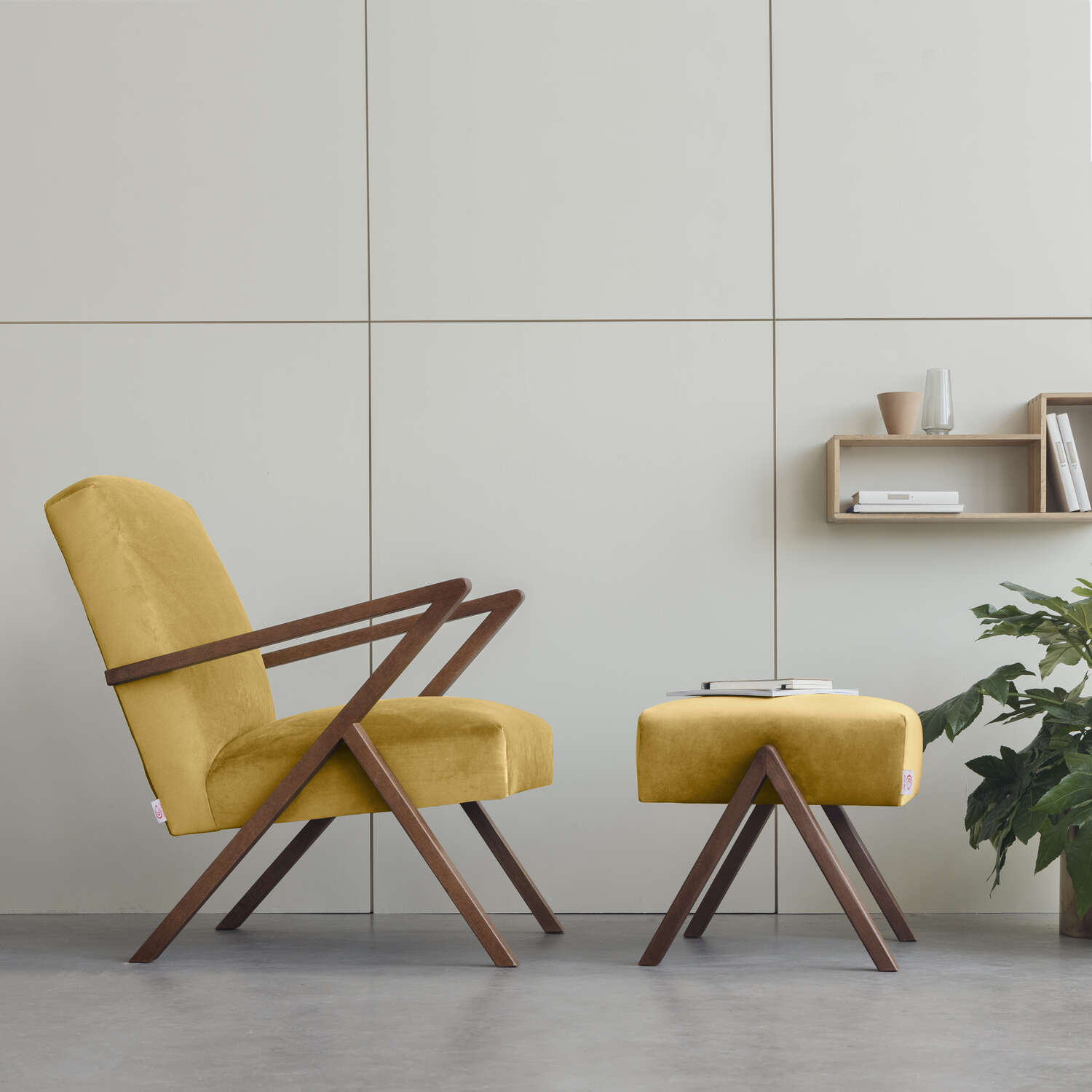
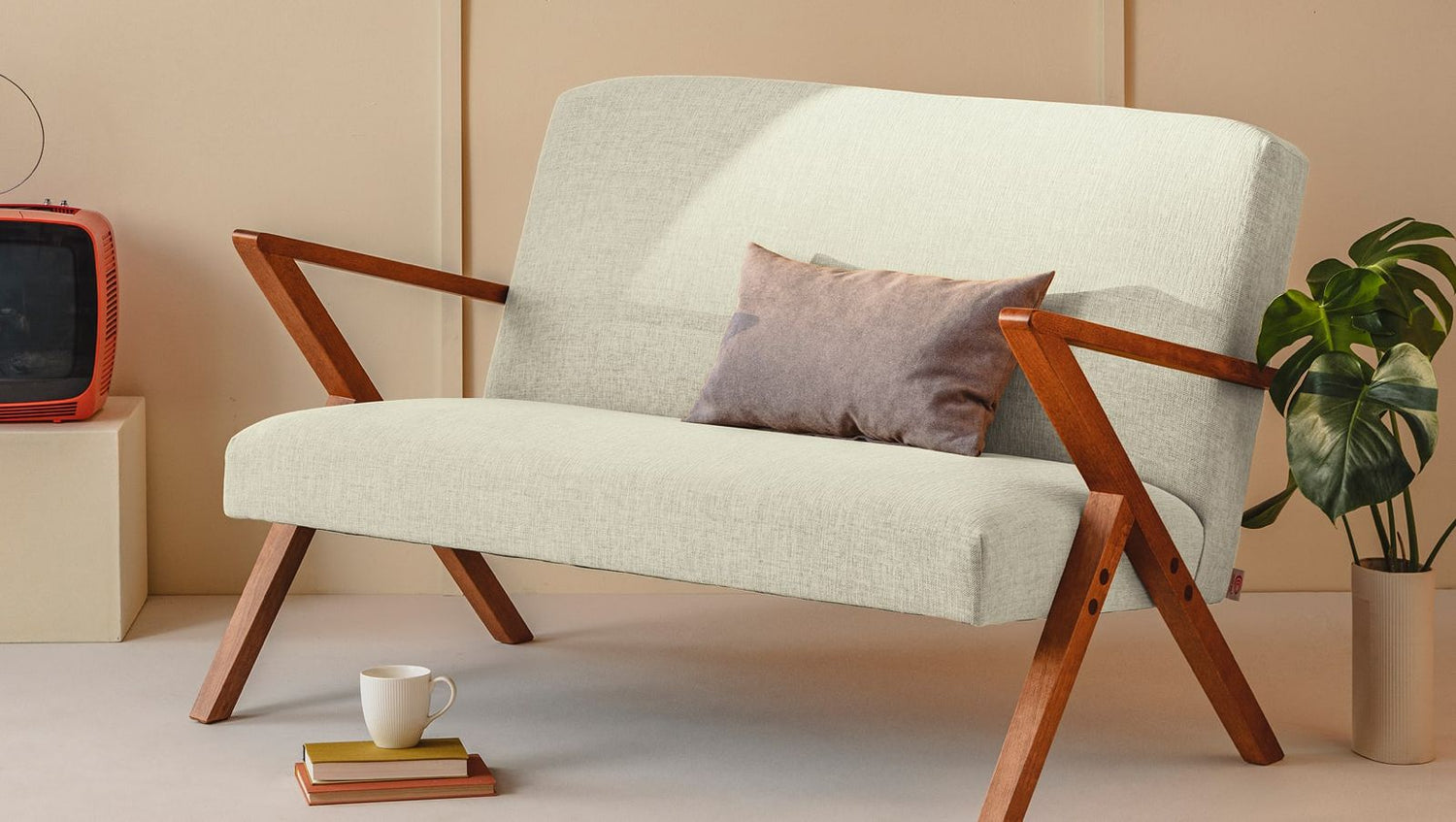
This design philosophy is particularly evident in a well-constructed sofa or a carefully designed mid-century armchair . For us as furniture designers, this is the special appeal of mid-century design: form and function work together to create furniture that is calm, clear, and timeless.

Historical origins of Mid Century Design
The origins of Mid-Century Modern design lie in the years following World War II, roughly between 1945 and the late 1960s. Particularly in the USA and Europe, architects and designers sought a clear and optimistic design language for living spaces. The desire for a new, modern way of life shaped architecture and furniture design during this period.
The Scandinavian design tradition also played a crucial role. Designers such as Hans J. Wegner, Arne Jacobsen, Alvar Aalto, and Finn Juhl combined meticulous craftsmanship with clear, functional forms. This so-called "Danish Modern" movement significantly shaped furniture design during this period.
Mid-century design emerged from the interplay of several influences: the ideas of the Bauhaus, the Scandinavian craft tradition and the optimism of the American post-war period, as well as new materials such as molded plywood or fiberglass.
With the advent of industrial possibilities, new forms and innovative furniture designs developed. Nevertheless, craftsmanship remained a central component of good furniture design. Furniture should be functional, durable, and aesthetically pleasing at the same time.
This attitude continues to shape mid-century furniture to this day. In our own production facilities located between Berlin, Brandenburg, and Poland, we also adopt these principles and interpret them in a contemporary way.
Typical shapes, colors and materials
Mid-century design appears light and clearly structured. Characteristic features include:
- slender, slightly splayed wooden legs
- horizontal lines
- organically curved seating surfaces
- clear, well-thought-out proportions
These materials still play an important role today:
- Solid wood with visible grain
- Leather with natural structure
- High-quality fabrics that can be individually selected depending on the room and piece of furniture.
- Metal used sparingly
In addition to these materials, new materials also played an important role. Molded plywood, fiberglass, and various plastics were particularly influential. Designers like Charles and Ray Eames experimented with these materials and developed furniture that would have been virtually impossible to create before and which is still considered design icons today.
In our own furniture design, we incorporate many of these principles, but consciously focus more on natural materials such as wood, leather, and high-quality fabrics. They age gracefully, are easy to repair, and remain usable for many years.
The color palette ranges from warm, natural tones to carefully chosen accents, later influenced by Pop Art. The balance within the space is always crucial.
Mid-century armchair with colorful geometric fabric in Bauhaus inspired design
Mid-century furniture in interior design
Mid-century furniture gives structure to a room without dominating it. It is particularly effective in open-plan living spaces, as it combines lightness, function, and clear proportions.
A mid-century armchair can become the tranquil focal point of a room.
A mid-century sofa provides stability while also offering a pleasant lightness.
That is precisely why this interior design style suits both modern architecture and timelessly designed living spaces.
Many of these design principles can also be found in our own furniture: clear lines, balanced proportions and a construction designed for longevity – as in our Retrostar series.
 Retrostar Armchair Wool Line in Mid-Century style
Why is Mid Century Design so popular again today?
The renewed popularity of mid-century design is not a short-term trend.
In a time of visual overstimulation, the need for clarity and substance is growing. Mid-Century -Furniture stands for exactly that:
- timeless design
- functional design
- durable materials
- a calm, thoughtful aesthetic
People who want to consciously design spaces so that they will last for many years will find a convincing answer in this style.
Mid-century design doesn't feel nostalgic. It feels deliberate. And perhaps that's precisely what makes it so relevant again today.
Frequently Asked Questions about Mid Century Design
What does "Mid Century" literally mean?
The term refers to the middle of the 20th century and describes a design period roughly between 1945 and the late 1960s.
How can you recognize mid-century furniture?
With clean lines, slender legs, organic shapes and a reduced design without superfluous ornaments.
Does mid-century design suit modern homes?
Yes. Its clear design language makes it very easy to combine with modern architecture.
Are mid-century furniture pieces durable?
Originally, many of these designs were intended to last. Today, the quality of the construction and the materials used is crucial.
Is mid-century design timeless?
Because the style is based on proportion, function and material honesty, it still appears consistent and attractive decades later.